Exhibitions
PERIGEE ARTIST #39 장종완
거울 회랑
2026.03.06. FRI ~
2026.04.25. SAT
<그리고 그 반대편>
신승오(페리지갤러리 디렉터)
장종완은 이상향으로 보이는 자연의 풍경과 그 안에 존재하는 생태계를 꾸준히 그려왔다. 《거울 회랑》은 그가 지금까지 해오고 있는 작업의 연장선에서 벗어나지 않으면서도 또 다른 작업 방향을 보여주고 있다. 작가의 말을 빌리자면, 이번 회화는 데칼코마니 기법처럼 접히고 다시 펼쳐지며 하나의 지형을 형성한다. 이곳은 실제의 시공간이라기보다는 끊임없이 반복되고 복제되는 구조 속에서 균형을 유지하는 이상향의 형식을 빌린 가상의 세계다. 이런 그의 작업은 어떤 명확한 서사구조에 기인하지 않지만, 마치 판타지 소설이나 영화의 세계관과 같이 느껴진다. 우리도 알다시피 판타지 소설이나 영화는 온전히 새롭게 창조된 세상이 아니라 우리가 지금까지 만들어온 역사에서부터 지금 사회를 구성하고 있는 다양한 요소들을 기반으로 재창조되기 마련이다. 이는 오늘날의 현실과 비슷하지만, 다른 방향으로 형성되어 나간 새로운 현실 공간이다. 따라서 그의 작업은 이와 같은 현실과 가상의 세계가 데칼코마니처럼 서로에게서 기인한 원래는 하나였던 시공간으로 볼 수 있다. 이렇듯 작가가 상상하는 것은 저 멀리 동떨어진 우리와 분리된 독자적인 세상이 아니라 우리와 가장 가까이에 밀착되어 있다. 뭔가 복잡한 시공간의 이야기처럼 느껴지지만, 이런저런 가능성을 상상해 보면 쉽게 이해가 간다. 우선 현재 인간 사회의 역사적 흐름 속에서 어떤 선택을 바탕으로 만....
"And the Other Side"
- Shin Seung Oh (Director, Perigee Gallery)
Jang Jongwan has steadily depicted landscapes of what appears to be an ideal natural world and the ecosystem that exists within it. Current exhibition, Mirror Corridor shows another direction in his work while not departing from the trajectory he has been pursuing thus far. To borrow Jang's words, these paintings fold and unfold like a decalcomania technique, forming a single topography. This place is not an actual space-time but rather a virtual world that borrows the form of an ideal realm, maintaining balance within a structure that endlessly repeats and replicates itself. Though his work is not grounded in any clear narrative, it evokes the worldview of a fantasy novel or film. As we know, fantasy novels and films are not entirely newly created worlds but are inevitably recreated based on various elements that constitute today's society, drawing from the history we have built up to now. This is a new reality space that resembles today's reality but has been formed in a different direction. Therefore, his work can be understood as a once....
신승오(페리지갤러리 디렉터)
장종완은 이상향으로 보이는 자연의 풍경과 그 안에 존재하는 생태계를 꾸준히 그려왔다. 《거울 회랑》은 그가 지금까지 해오고 있는 작업의 연장선에서 벗어나지 않으면서도 또 다른 작업 방향을 보여주고 있다. 작가의 말을 빌리자면, 이번 회화는 데칼코마니 기법처럼 접히고 다시 펼쳐지며 하나의 지형을 형성한다. 이곳은 실제의 시공간이라기보다는 끊임없이 반복되고 복제되는 구조 속에서 균형을 유지하는 이상향의 형식을 빌린 가상의 세계다. 이런 그의 작업은 어떤 명확한 서사구조에 기인하지 않지만, 마치 판타지 소설이나 영화의 세계관과 같이 느껴진다. 우리도 알다시피 판타지 소설이나 영화는 온전히 새롭게 창조된 세상이 아니라 우리가 지금까지 만들어온 역사에서부터 지금 사회를 구성하고 있는 다양한 요소들을 기반으로 재창조되기 마련이다. 이는 오늘날의 현실과 비슷하지만, 다른 방향으로 형성되어 나간 새로운 현실 공간이다. 따라서 그의 작업은 이와 같은 현실과 가상의 세계가 데칼코마니처럼 서로에게서 기인한 원래는 하나였던 시공간으로 볼 수 있다. 이렇듯 작가가 상상하는 것은 저 멀리 동떨어진 우리와 분리된 독자적인 세상이 아니라 우리와 가장 가까이에 밀착되어 있다. 뭔가 복잡한 시공간의 이야기처럼 느껴지지만, 이런저런 가능성을 상상해 보면 쉽게 이해가 간다. 우선 현재 인간 사회의 역사적 흐름 속에서 어떤 선택을 바탕으로 만들어진 시공간이 우리가 살고 있는 현실이라 본다면, 그 하나하나의 선택이 달리 진행되었다면 세상은 지금과 어떻게 다른 모습일지를 떠올려보면 좋을 것 같다. 여기에 더해 SF 영화에 종종 나오듯이 우리가 우주 저편에 지구와 유사한 환경의 행성을 발견하고 그곳에 정착해 새로운 사회를 만들기 위한 출발점이 어떤 모습일지 상상해 보자. 이렇게 그의 작업 앞에서 여러 상상이 가능한 것은 그가 그리는 세상이 판타지, SF 소설의 작가처럼 자신의 삶을 형성하고 있는 여러 가지 요소와 미래에 대한 바람이 담겨 있는 가상의 시공간이기 때문일 것이다. 그렇다면 작가는 그의 그림을 통해 우리에게 무엇을 보여주고 싶은 것인지 원론적인 질문에서부터 시작해야겠다.
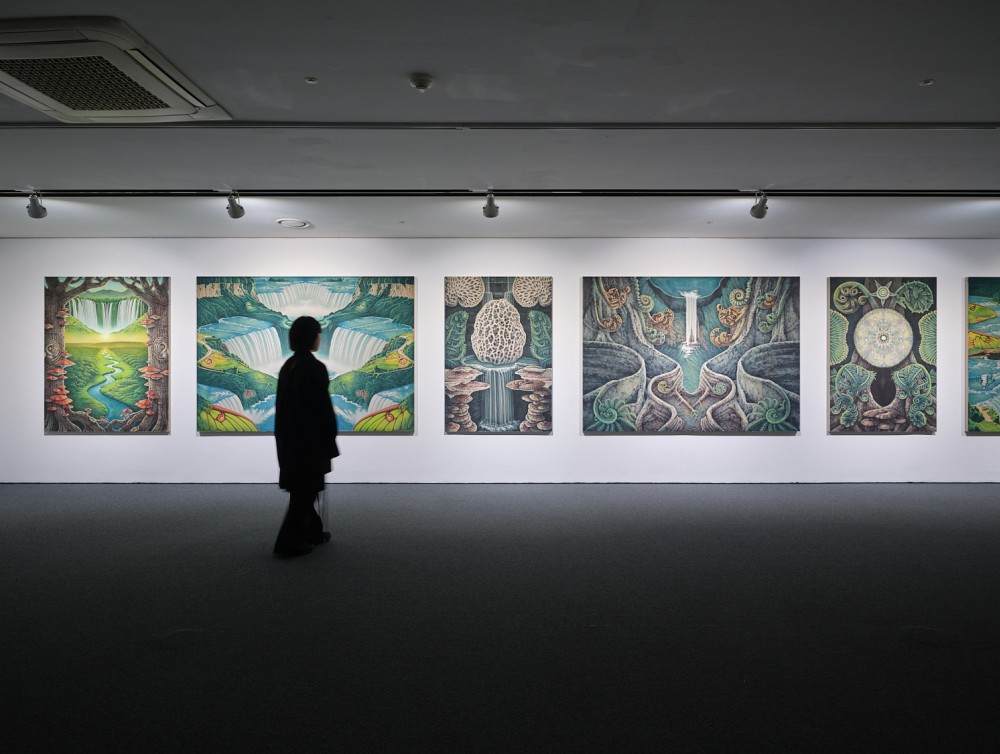
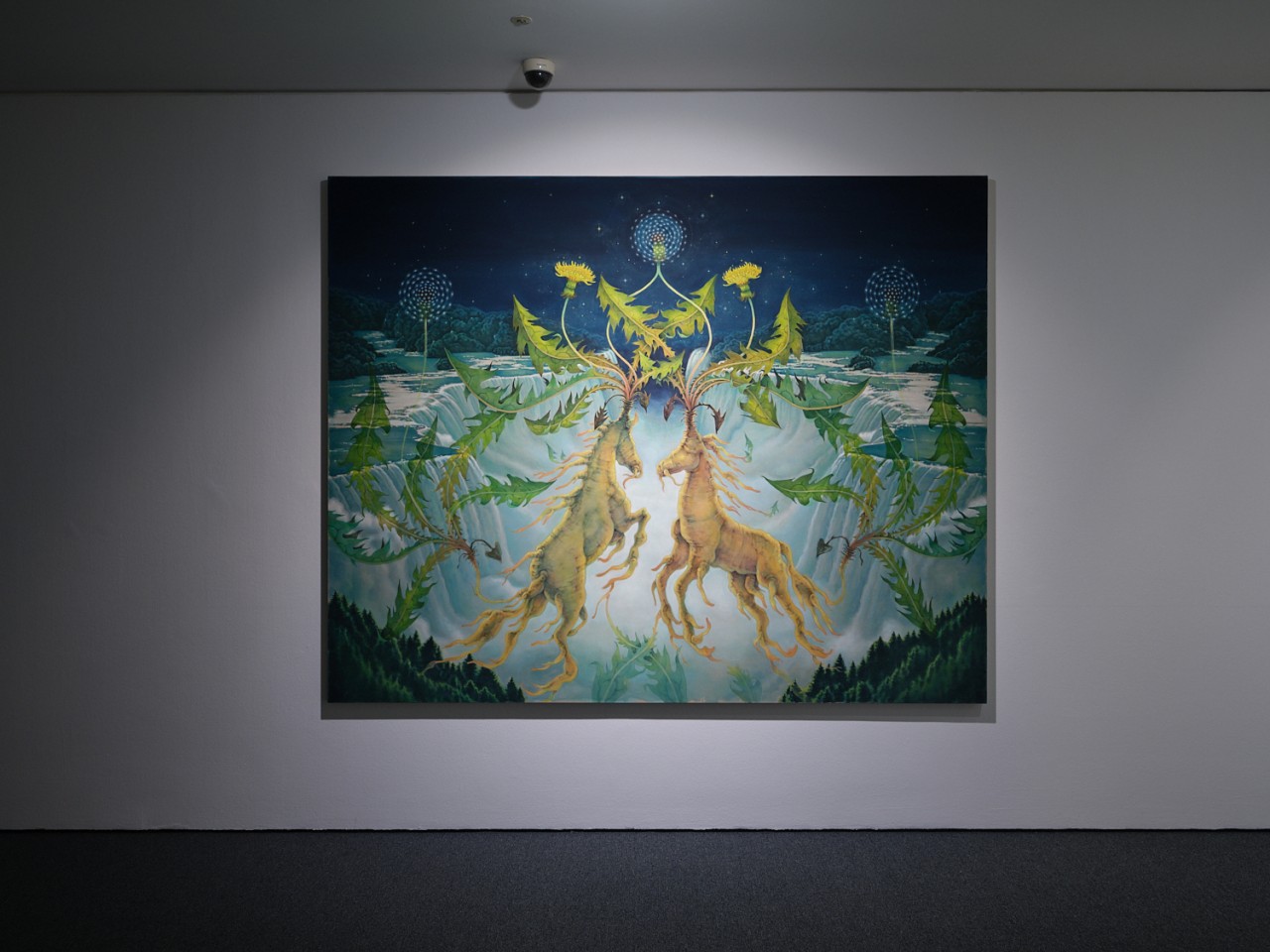
먼저 그의 그림을 살펴보자. <뉴 에이지 나이아가라 1>, <뉴 에이지 나이아가라 2>의 폭포 주변의 모습이 뭔가 이상하다. 양의 눈과 코와 입의 모습이 보이고 다른 한편엔 나방의 날개 문양으로 이루어진 들판이 나타난다. 그뿐만 아니라 <부엉이 교향곡 1>, <부엉이 교향곡 2>에는 나무 그 자체가 부엉이이고 그 위로 버섯들이 자라고 있다. <거울 회랑 1>, <거울 회랑 2>에는 역동적인 말의 모습을 한 민들레 뿌리가 등장한다. <거울 정원 1>, <거울 정원 2>, <소실점>에서는 고사리, 버섯, 민들레 홀씨 같은 식물이 확대되어 거대한 구조물같이 자리 잡고 있다. 대지와 하늘은 마치 하나의 생명체 같고, 나무는 동물과 버섯이 공존하는 토대이고, 식물은 역동적인 동물과 같은 모습, 혹은 거대한 건축적 구조를 이룬다. 사실 이들은 그의 작업에 이미 종종 등장했던 동식물이다. 하지만 이번에 작업에서 이들은 개별적 성격을 드러내기보다는 서로에게 물들고 스며든 것 같은 동질화된 모습으로 나타난다. 이렇듯 그가 그리는 풍경은 자연의 신비로운 풍경을 그려내면서도 그 속에서 찾아볼 수 있는 다양한 생명체의 모습이 주는 은밀한 매력으로 인해 마치 우리의 손길이 닿지 않은 그들만의 세상인 것 같이 보인다. 이처럼 그가 상상하는 세상은 전혀 우리와 관계없이 어느 순간 갑자기 나타난 결과물과 같은 모습이다. 우리는 이곳이 무엇인가가 생성되는 순환의 과정에서 변형되어 나타났는지, 그곳에 그려진 것을 통해 논리적으로 유추하기 힘들다. 다만 인간 존재가 배제된 상태에서 다른 존재끼리 오랜 시간을 공존하며, 서로에게 배인 공기들로 어우러진 낯선 감각을 통해 복잡 미묘한 감정을 느끼게 될 뿐이다. 그래서 그 앞에 선 우리는 지금 살고 있는 시공간과 다른 낯선 모습으로 ‘나’의 부재를 강하게 인식하게 된다. 따라서 그의 그림과 같이 내가 없는 풍경 앞에 서면 거울을 보듯이 우리가 살아가는 세상과 비교하면서 그 가상의 세계를 거꾸로 더듬어 나갈 수밖에 없다. 이것이 가상의 세계를 통해 현실을 반추하는 그의 그림이 가진 특징이다.
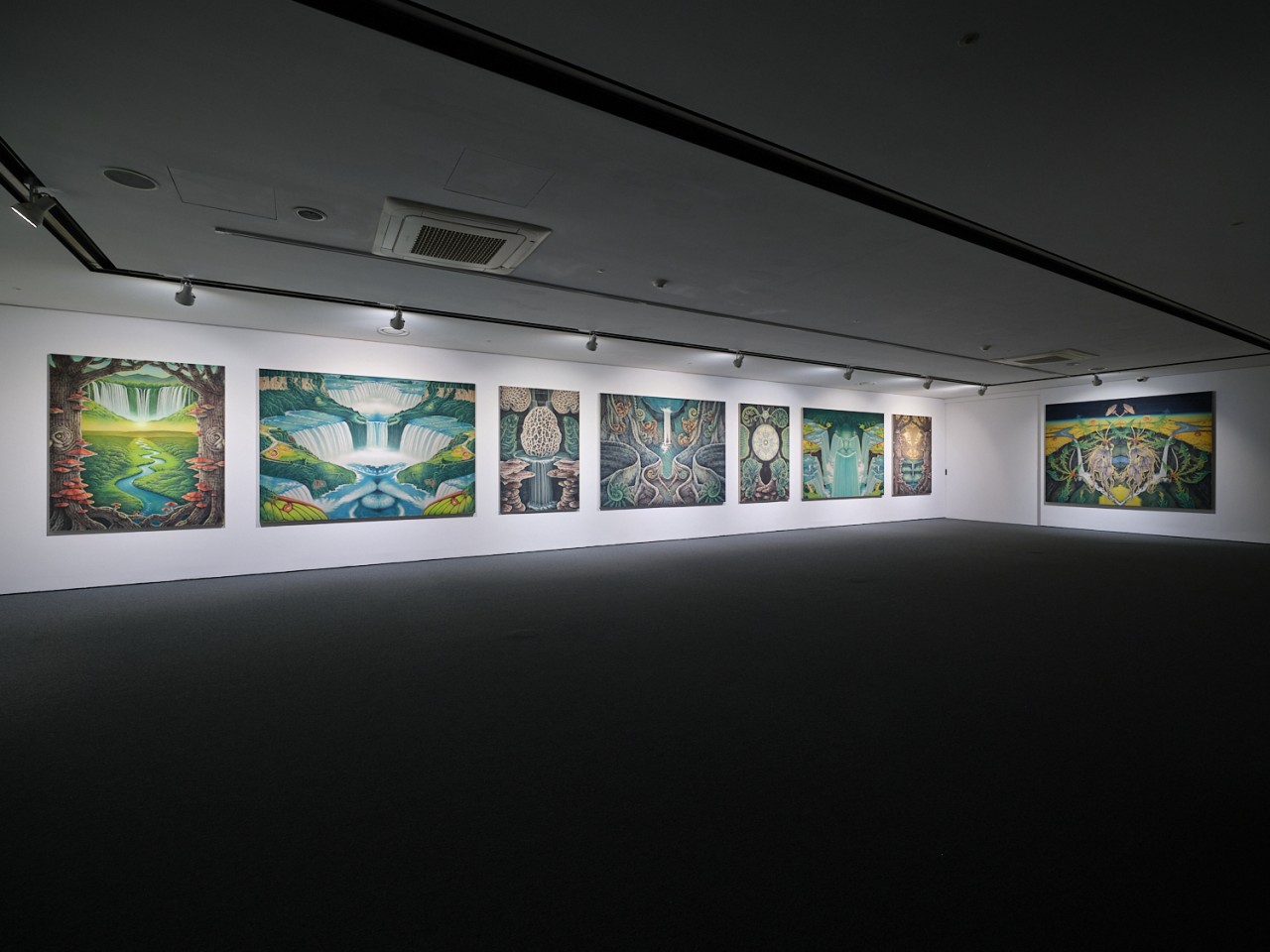
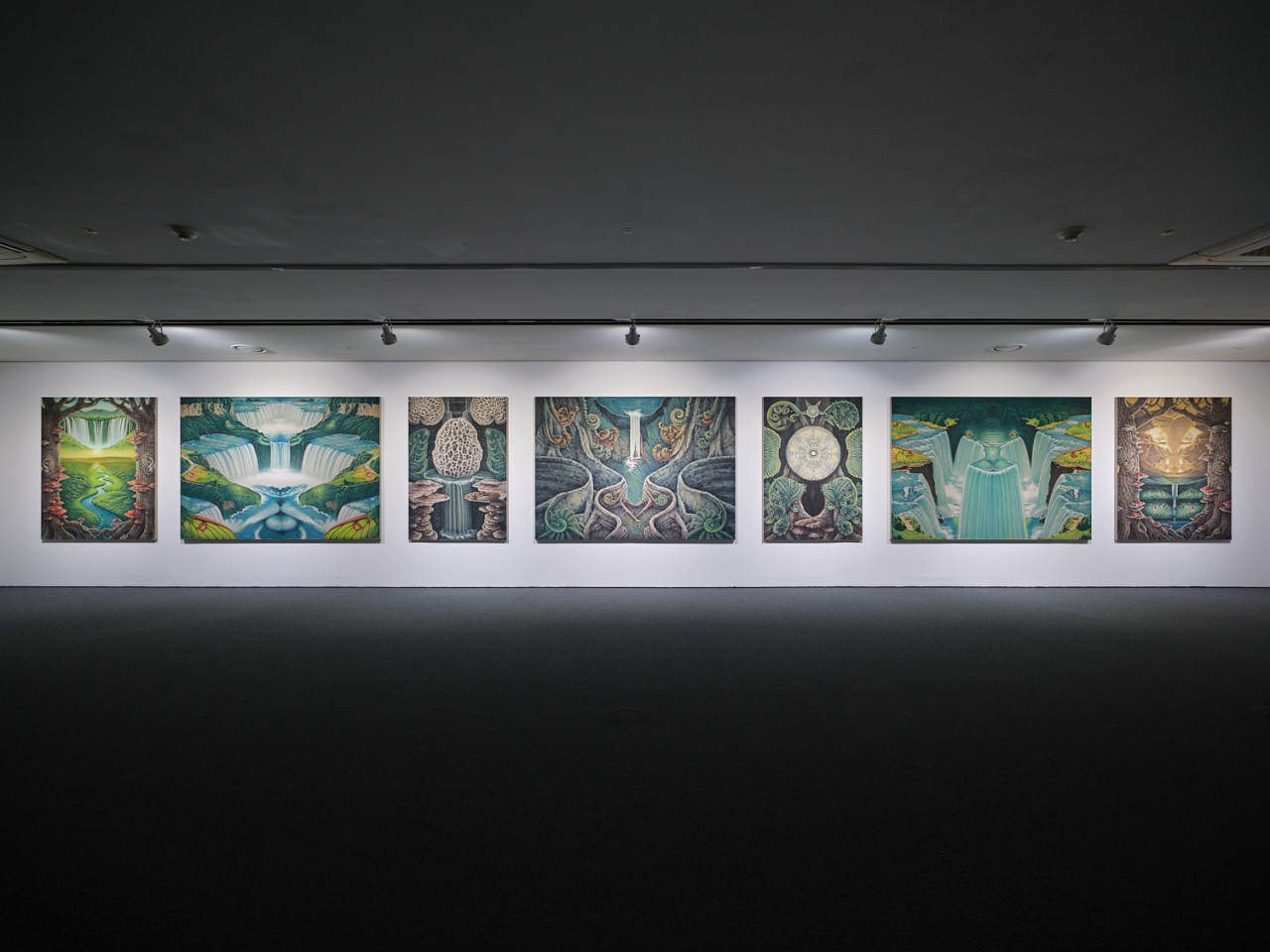
이번 전시에서는 이러한 특징과 더불어 전시와 작품을 구성하는 구조가 두드러진다. 하나는 글의 앞에서 언급했던 그림과 전시 안에서 펼쳐지는 좌우대칭의 균형이다. 작가는 동일한 제목을 가진 작업을 두 점씩 제작하였고, 이들은 <소실점>을 중심으로 좌우로 나란히 배치되어, 좌우대칭을 이루고 있다. 균형을 맞춘다는 것은 한편으로 안정적인 느낌을 주지만, 이것이 반복되면 강박적 집착과 같은 답답함이 느껴지기도 한다. 그럼에도 작가는 그림의 표면에서 만들어가는 신령스럽고 질서 정연한 대칭적 표면으로 구성된 풍경 속에서 미세한 형태를 변주하고, 숨은그림찾기와 같은 구체적 형상을 덧입혀 균형과 강박의 층위를 쌓아 나간다. 이뿐만 아니라 전시장 전체를 작품에 그려진 풍경 속 소실점 너머에 존재하는 세계로 진입하기 위한 좌우대칭의 회랑으로 연출하고자 하였다. 그의 작업에서 나타나는 대칭적 균형은 계곡, 동굴, 평원, 폭포와 같이 깊이를 알 수 없는 아득히 먼 곳으로 나타난다. 그것은 이질적인 것을 서로 결합하고 거울처럼 서로를 비추어 마주 보게 만드는 상황을 연출하여 마치 새로운 세상으로 가는 입구처럼 보이기도 한다. 한편으로는 이들의 구성은 복잡한 상호 관계에서 발생하는 접점들로 인해 서로 이질적인 감각들이 충돌하면서도 조화롭게 그려진다. 여기서 주목되는 것은 그의 공간이 요동치는 불안정한 상태가 아니라 표면적으로는 평온하고 장엄하게 분위기를 가진다는 점이다. 하지만 그의 그림처럼 고요하고 깊이를 알 수 없는 평온은 사실상 가상의 시공간이기에 가능한 것이다. 이렇게 본다면 그가 바라보고 겪고 있는 현실 속에서의 불안과 두려움은 직접적으로 그림에 나타나지 않지만 그의 작업에서 균형과 조화로 이루어진 세상에 대한 갈망과 함께 동시에 표출되고 있다. 이번 작업이 고요하고 아름답게 보이면서도 생명력 가득한 생기 있는 공간으로 보이지 않는 기묘한 풍경으로 보이는 것은 이런 이유에 기인한 것으로 보인다. 그렇다고 해서 이러한 좌우대칭의 균형은 작가에게 있어 고정되고 안정된 가상 세계를 구축하여 그것에 어떤 미래에 대한 바람을 담거나 현실을 회피하기 위해 사용하는 것은 아니다. 오히려 이러한 방식은 다르면서도 닮아 있는 서로를 비추는 현실과 가상 사이에서 떼어놓을 수 없는 두 상황을 모두 직시하려는 작가의 태도를 상징적으로 보여주고 있다고 여겨진다. 그렇다면 그의 작업을 그저 가상의 풍경으로만 보아야 할까?
그 답을 찾기 위해서 또 다른 중요한 구조인 소실점을 살펴보자. 소실점은 어느 하나의 지점으로 귀결되는 위계적인 구조처럼 보이지만, 사실 그 끝이 보이지 않는 가상의 지점을 통해 화면에서 깊이감을 만들어 내는 데 효과적이다. 그러면 소실점 너머에 존재하는 저 너머의 세상은 도대체 어떤 곳일까? 먼저 우리가 저 멀리 무엇인지 모를 소실점을 도달해야 하는 목적지로 이해하고 그 앞에 서 있다고 가정해 보자. 우리는 알 수 없는 모험의 길을 떠나는 것과 같은 상황일 것이다. 그렇다면 지금 여기와 다른 방향의 길로 들어서는 선택을 하는 출발점은 오히려 지금 여기라는 위치를 재인식하게 만드는 근거가 된다. 그 지점에 존재하기에 다른 곳으로 떠날 수 있기 때문이다. 다시 길을 걷는 우리를 상상해 보자. 우리는 소실점이라는 통로의 끝을 예측하는 것보다는 거기까지 다다르기 위해 겪어야 하는 여러 일들을 고스란히 느끼는 경험을 하게 될 것이다. 이러한 소실점의 기능은 작가 자신이 느끼면서 다시 자신의 환경을 돌아보는 일, 그것이 주는 발견의 경이로움을 의도하는 것이다. 그렇다면 우리는 어디에 도달하게 될까? 그 답은 소실점에 있다. 이를 전시 제목인 ‘거울’과 연결해 본다면, 이 소실점은 도달할 수 없는 가상의 것에서 벗어나 또 다른 소실점으로 이어지는 공간을 열어준다. 그것은 내 앞에 존재하는 것이 아니라 나의 뒤로 펼쳐지는 현실의 공간이다. 다시 말하면 작가의 그림 속 아득히 먼 곳을 바라보는 시선 너머로 이어지는 길을 이어 나가면 다시 우리가 사는 세상으로 돌아오게 된다. 이런 방식으로 그의 그림은 또 다른 대칭으로 균형을 이룬다. 이와 같이 《거울 회랑》은 좌우 대칭의 구조와 동시에 작용함으로써 그가 그리는 가상과 현실을 거울처럼 비춰주는 것뿐만 아니라 현실에서 출발해 가상을 지나 다시 현실로 돌아오는 대칭적인 순환구조를 만들어 내고 있다. 그렇지만 우리가 미처 듣지 못하고 보지 못한 것과 이미 체득한 세상 사이에서 시선을 따라서 돌아온 소실점은 이전과는 다른 새로운 현실로 나타난다. 이렇게 그의 그림이 의도하는 시선의 흐름만으로도 지금 여기를 변하게 만들 힘을 가지고 있는 것으로 보인다. 아무리 떨쳐버리려 해도 우리의 삶은 여러 선택의 길로 이루어지지만, 이쪽이나 저쪽에서 봐도 ‘나’라는 소실점으로 귀결된다. 이렇듯 그는 삶이라는 모험이 가진 현실적 두려움과 불안이 가진 가능성을 작가적 상상력을 통해 그가 그리는 허구의 시공간에 담아 새로운 현실로 우리에게 다가오게 만든다. 이는 단순히 앞에 놓인 한 방향의 미래로 진행되는 맹목적 진행이 아니라 뒤에서 나를 비추고 있는 과거의 경험을 현재로 끌어오는 반복적인 순환구조와 연동된다. 결국 그가 그림을 통해 이야기하는 것은 우리가 바라보려 하는 것이 저 멀리 보이지도 않는 곳에 존재하는 것이 아니라 언제나 우리 주변에 있다는 현실을 계속해서 인식하게 만들어 균형을 유지하는 것이다. 여기서 소실점은 거울과 통로의 역할을 통해 앞과 뒤, 옆과 또 다른 옆, 가상과 현실을 이어내어 이들의 균형을 가능하게 하는 장치이다.
정리해 보자면, 장종완의 소실점과 좌우 대칭의 균형으로 이루어지는 구조는 우리에게 평화롭고 조화로운 이상향 혹은 불안하고 불안정한 현실을 벗어난 영역인 생각과 꿈, 논리와 상상의 경계를 자유롭게 횡단하는 새로운 시공간을 열어준다. 또한 회화라는 평면적 공간을 관통하여 입체적 시공간을 따르는 시선의 흐름을 통해 다시 우리가 살고 있는 이곳으로 돌아오게 되는 기묘한 시각적 경험을 유도한다. 물론 작가의 이런 작업 태도는 자신을 비추는 거울 같은 회화라는 시공간을 통해 삶이 계속해서 나아가는 길임과 동시에 어떤 지점에 여러 시선을 맞추고 뒤를 돌아보는 일의 반복임을 스스로 인식했기에 가능한 일이었을 것이다. 그러나 우리는 ‘나’의 의지와 상관없이 익숙한 것들이 조금씩 새롭고 낯선 환경으로 흘러가는 통제할 수 없는 유동적인 환경에 놓여 있다. 이는 불안의 정서가 끊임없는 갈등과 상념을 불러일으키기 때문에 삶을 지속해 나가는 것은 현실적으로 한 치 앞도 보이지 않는 여정이다. 그렇기에 우리는 작가의 그림과 같이 가상과 실제, 상상과 현실의 도움이 모두 필요하다. 그것은 이번 전시처럼 그림의 좌우, 안과 밖, 그것을 보는 시선의 앞과 뒤가 서로에게 연결되어 떨어질 수 없는 하나의 짝처럼 스며들어 있는 모습으로 나타난다. 지금까지 살펴본 것과 같이 그의 그림은 무엇인가의 실체를 밝혀내기 위한 은유로 이루어진 재치 있는 작업으로 보이지만, 사실은 우리에게 아무것도 밝히지 않는 그림이기도 하다. 단지 중요한 것은 그것을 그린 작가와 함께 그것을 보는 바로 이곳에 있는 우리 존재 그 자체이다. 따라서 그의 전시를 보면서 그가 그리는 여기는 유토피아일까 디스토피아일까? 온전히 가상인가? 아니면 현실을 반영한 또 다른 현실인가? 혹은 아름답고 신비로운 공간인가? 뭔가 모를 이상한 낌새로 농후한 의심스러운 공간인가? 이런 구분은 중요하지 않다. 나는 무엇이 되었든 그곳과 그 반대편 사이에서 계속해서 서서히 양쪽으로 스며들고 있을 테니 말이다.
- Shin Seung Oh (Director, Perigee Gallery)
Jang Jongwan has steadily depicted landscapes of what appears to be an ideal natural world and the ecosystem that exists within it. Current exhibition, Mirror Corridor shows another direction in his work while not departing from the trajectory he has been pursuing thus far. To borrow Jang's words, these paintings fold and unfold like a decalcomania technique, forming a single topography. This place is not an actual space-time but rather a virtual world that borrows the form of an ideal realm, maintaining balance within a structure that endlessly repeats and replicates itself. Though his work is not grounded in any clear narrative, it evokes the worldview of a fantasy novel or film. As we know, fantasy novels and films are not entirely newly created worlds but are inevitably recreated based on various elements that constitute today's society, drawing from the history we have built up to now. This is a new reality space that resembles today's reality but has been formed in a different direction. Therefore, his work can be understood as a once-unified space-time, where reality and the virtual emerge from each other like decalcomania. Thus, what Jang imagines is not an independent world far removed and separated from us, but something that adheres most closely to us. Though it may feel like a complex story of space-time, it becomes easy to understand if we imagine various possibilities. First, if we consider that the space-time we inhabit is a reality created based on certain choices within the historical flow of human society, it would be good to think about what the world would look like differently if each of those choices had proceeded otherwise. Adding to this, as often appears in science fiction films, let us imagine what the starting point would look like if we discovered a planet with an environment similar to Earth somewhere in the universe and settled there to create a new society. That such imaginative possibilities arise before his work is perhaps because the world he depicts—like that of a fantasy or science fiction writer—is a virtual space-time containing various elements that shape his life and hopes for the future. Then, we must begin with the fundamental question of what Jang wants to show us through his paintings.
First, let us examine his paintings. Something seems strange about the surroundings of the waterfall in New Age Niagara 1 and New Age Niagara 2. The eyes, nose, and mouth of a sheep are visible, and on the other side appears a field composed of moth wing patterns. Not only that, but in Symphony of Owls 1 and Symphony of Owls 2, the trees themselves are owls with mushrooms growing atop them. In Mirror Corridor 1 and Mirror Corridor 2, dandelion roots shaped like dynamic horses appear. In Mirror Garden 1, Mirror Garden 2, and Vanishing Point, plants such as bracken ferns, mushrooms, and dandelion seeds are magnified and positioned like gigantic structures. The earth and sky are like a single living organism; trees are foundations where animals and mushrooms coexist; and plants take on the appearance of dynamic animals or form massive architectural structures. In fact, these are flora and fauna that have already often appeared in his work. However, in this body of work, rather than revealing their individual characteristics, they appear in a homogenized form as if stained by and permeated into each other. In depicting mysterious natural scenery, Jang imbues the landscape with an intimate allure through its diverse life forms—making it feel like a world entirely their own, where we have never ventured. As such, the world Jang imagines appears like a result that suddenly emerged at some moment, completely unrelated to us. From what is depicted, we cannot logically deduce whether this place arose transformed through some cyclical process of generation. We merely feel complex and subtle emotions through the unfamiliar sensation of atmospheres that have permeated each other as different beings coexisted for a long time in a state where human existence is excluded. Therefore, standing before it, we strongly recognize the absence of the self in this unfamiliar form different from the space-time we currently inhabit. Thus, when standing before a landscape without me, as in his paintings, we inevitably trace backward through that virtual world by comparing it with the world we live in, as if looking into a mirror. This is the characteristic of his paintings that reflect on reality through a virtual world.
Beyond these characteristics, what stands out is how the exhibition and works are structured. One element is the left-right symmetrical balance within the paintings and their installation, as mentioned at the beginning of this text. Jang produced two works each with identical titles, and these are arranged side by side to the left and right with Vanishing Point at the center, forming left-right symmetry. Balance brings stability, but its repetition can feel stifling, bordering on obsession. Nevertheless, he builds up layers of balance and obsession by creating subtle variations in form within landscapes composed of mystical and orderly symmetrical surfaces on the picture plane, and by overlaying concrete shapes like hidden picture puzzles. Furthermore, he intended to direct the entire exhibition space as a left-right symmetrical corridor for entering the world that exists beyond the vanishing point in the landscape depicted in the works. The symmetrical balance that appears in his work manifests as distant places of unfathomable depth—valleys, caves, plains, and waterfalls. It creates situations where heterogeneous elements are combined with each other and made to face each other by reflecting like mirrors, sometimes appearing like an entrance to a new world. On the other hand, their composition is harmoniously depicted even as heterogeneous sensations collide due to the points of contact arising from complex interrelationships. What is noteworthy here is that his space does not possess a turbulent, unstable state but rather exudes a superficially tranquil and majestic atmosphere. However, this quiet tranquility of unfathomable depth, as in his paintings, is only possible because it exists in a virtual space-time. Viewed this way, the anxiety and fear Jang observes and experiences in reality do not appear directly in the paintings, but are expressed simultaneously with his longing for a world of balance and harmony. It seems that this body of work appears as a peculiar landscape that looks quiet and beautiful yet does not seem like a vital space full of life force for this reason. However, this left-right symmetrical balance is not used by him to construct a fixed and stable virtual world in which to place some hope for the future or to escape reality. Rather, this method seems to symbolically show his attitude of trying to directly confront both inseparable situations—between reality and the virtual that reflect each other while being different yet similar. Then, should we view his work merely as a virtual landscape?
To find that answer, let us examine another important structure: the vanishing point. The vanishing point appears like a hierarchical structure converging on a single point, but it is actually effective in creating a sense of depth on the picture plane through a virtual point whose end is not visible. Then, what kind of place is that world beyond the vanishing point? First, let us suppose that we understand that distant vanishing point—whose nature we cannot know—as a destination we must reach, and stand before it. We would be in a situation like embarking on an unknown adventure. Then, the starting point of choosing to enter a path in a different direction from here and now becomes the basis for re-recognizing the position of here and now. Because we exist at that point, we can depart for other places. Let us again imagine ourselves walking the path. Rather than predicting the end of the passage called the vanishing point, we will have the experience of fully feeling the various things we must go through to reach there. This function of the vanishing point evokes the wonder of discovery—the feeling that arises when we look back at our own surroundings. Then, where will we arrive? The answer lies in the vanishing point. If we connect this with "mirror" from the exhibition title, this vanishing point breaks away from the unreachable virtual and opens a space leading to another vanishing point. It is not something that exists before me but the space of reality unfolding behind me. In other words, if we follow the path that continues beyond the gaze looking toward the distant place in his paintings, we return to the world we live in. In this way, his paintings achieve balance through another symmetry. Thus, Mirror Corridor works simultaneously with the left-right symmetrical structure not only to mirror the virtual and real he depicts, but also to create a symmetrical circular structure that departs from reality, passes through the virtual, and returns to reality again. However, as our gaze returns along this path—traveling between what we have not yet encountered and the world we have already embodied—the vanishing point reveals itself as a new reality, different from before. It seems that the flow of gaze his paintings intend alone has the power to change here and now. No matter how much we try to shake it off, our lives consist of various paths of choice, but whether viewed from this side or that side, they converge on the vanishing point that is the self. Thus, Jang places the realistic fear inherent in the adventure called life, along with the possibilities that anxiety holds, into the fictional space-time he depicts through his artistic imagination, making it approach us as a new reality. This is linked not with blind progression toward a unidirectional future laid out ahead, but with a repetitive circular structure that brings past experiences reflecting me from behind into the present. Ultimately, what he tells through his paintings is to continuously recognize the reality that what we seek to see does not exist somewhere far away and invisible, but is always around us—thereby maintaining balance. Here, the vanishing point is a device that enables this balance by connecting front and back, side and another side, virtual and real through its role as mirror and passage.
To summarize, the structure formed by Jang Jongwan's vanishing point and left-right symmetrical balance opens for us a new space-time that freely traverses the boundaries of thought and dreams, logic and imagination—a realm departing from either a peaceful and harmonious ideal or an anxious and unstable reality. It also induces a peculiar visual experience of returning to this place where we live through the flow of gaze that penetrates the planar space of painting and follows three-dimensional space-time. Of course, this artistic approach was possible because Jang recognized for himself, through the space-time of painting that serves as a mirror reflecting him, that life is simultaneously a path that continues forward and a repetition of focusing multiple gazes on a certain point and looking back. However, we are placed in an uncontrollable fluid environment where familiar things gradually flow into new and unfamiliar environments regardless of one's will. Because the emotion of anxiety constantly evokes conflict and contemplation, sustaining life is realistically a journey where we cannot see even one step ahead. Therefore, we need the help of both the virtual and the real, imagination and reality, as in his paintings. This appears in the form where the left and right of the painting, inside and outside, and the front and back of the gaze looking at it are connected to each other and permeate like an inseparable pair, as in this exhibition. As we have examined so far, while his paintings appear to be witty works composed of metaphors to reveal the substance of something, they are actually paintings that reveal nothing to us. The only important thing is the very existence of us here who view it together with the artist who painted it. Therefore, while viewing his exhibition: Is the place he depicts utopia or dystopia? Is it entirely virtual? Or is it another reality reflecting reality? Or is it a beautiful and mysterious space? Or a suspicious space thick with some inexplicable, strange foreboding? Such distinctions are not important. Whatever it may be, I will continue to slowly permeate both sides between that place and the other side.
 장종완 《거울 회랑》전시 전경, 2026, 사진: 이의록
 장종완 《거울 회랑》전시 전경, 2026, 사진: 이의록
 장종완 《거울 회랑》전시 전경, 2026, 사진: 이의록
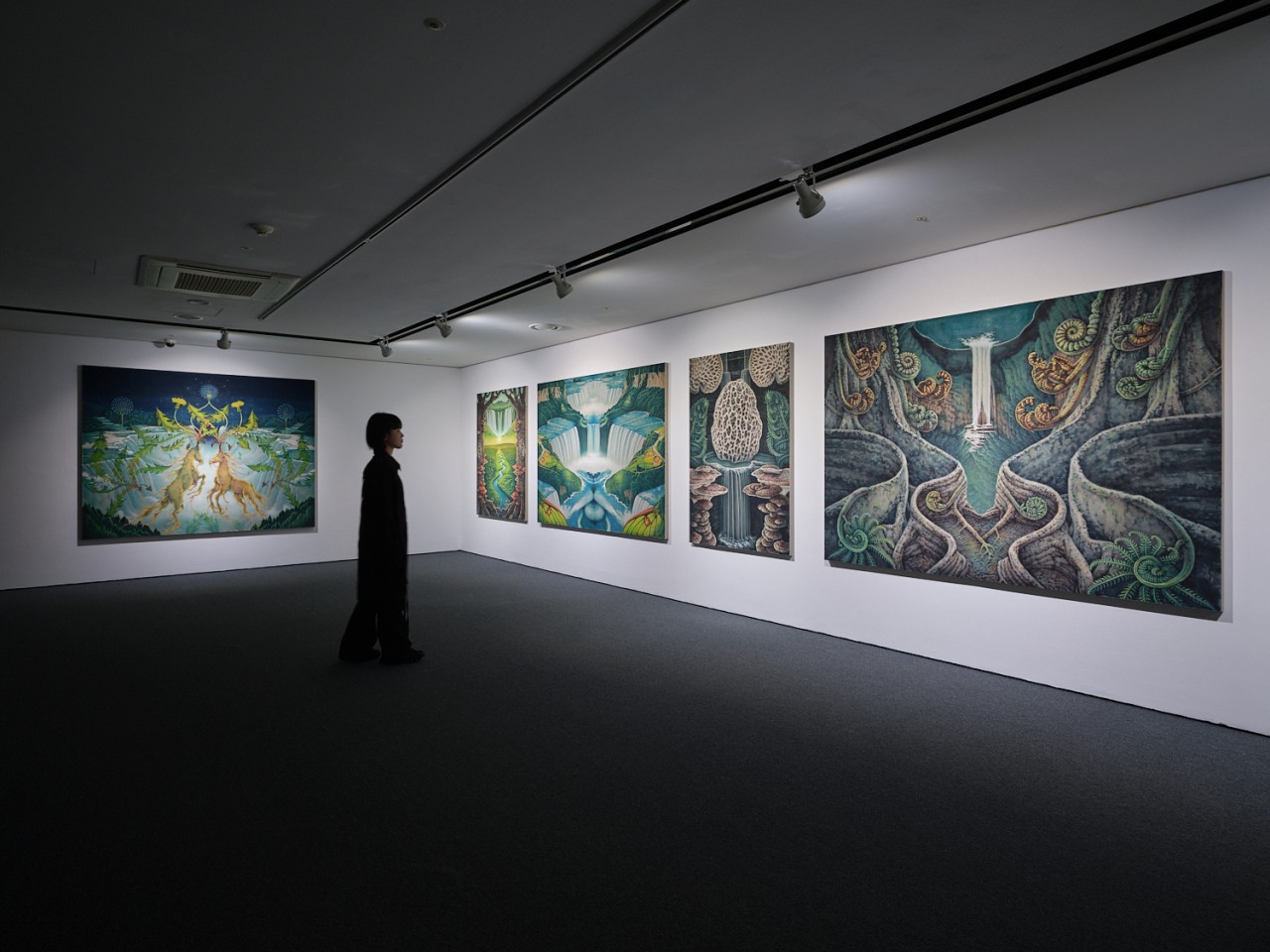 장종완 《거울 회랑》전시 전경, 2026, 사진: 이의록
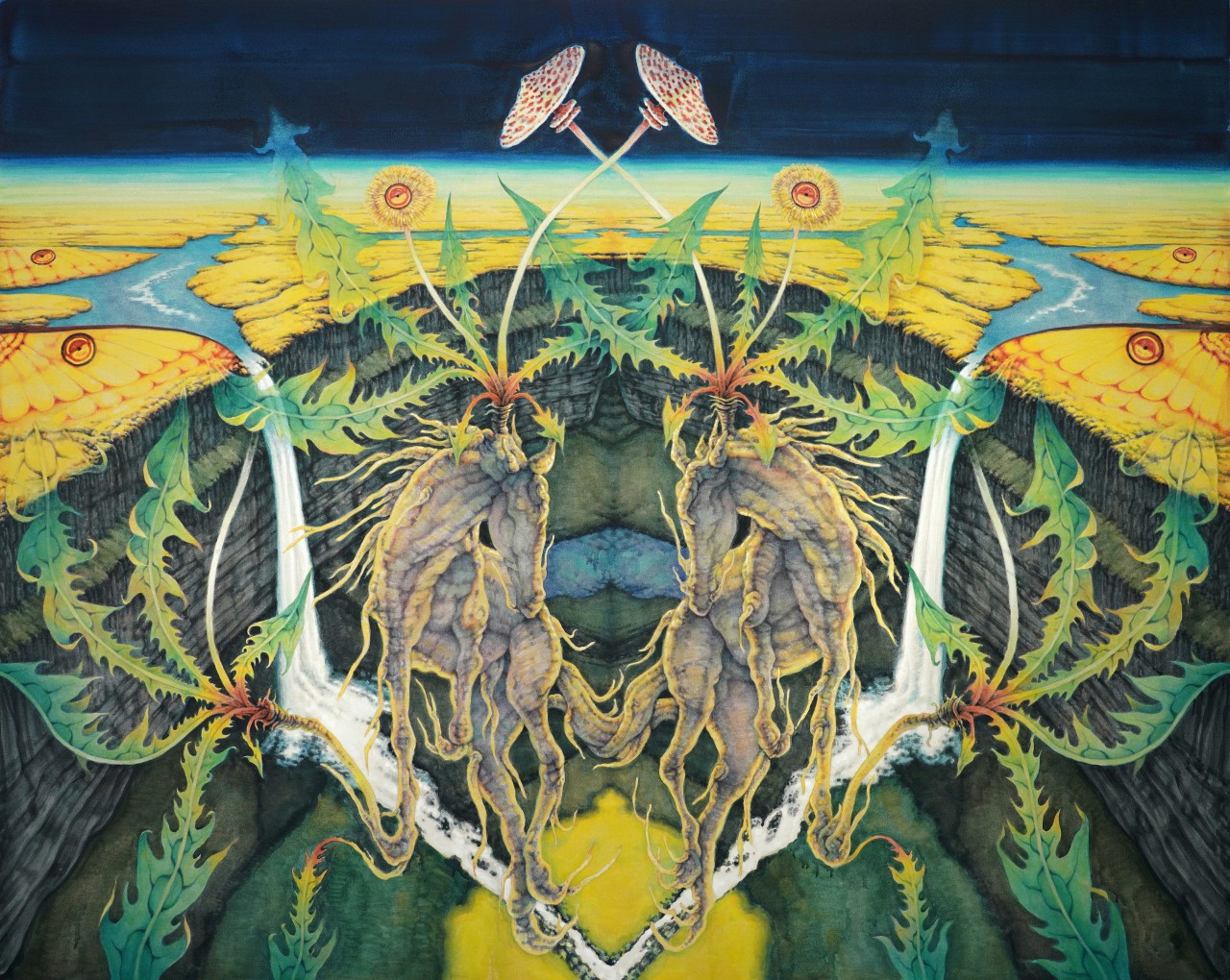 장종완, <거울 회랑 2>, 2026, 린넨에 아크릴릭 과슈, 색연필, 181.9X227.4cm
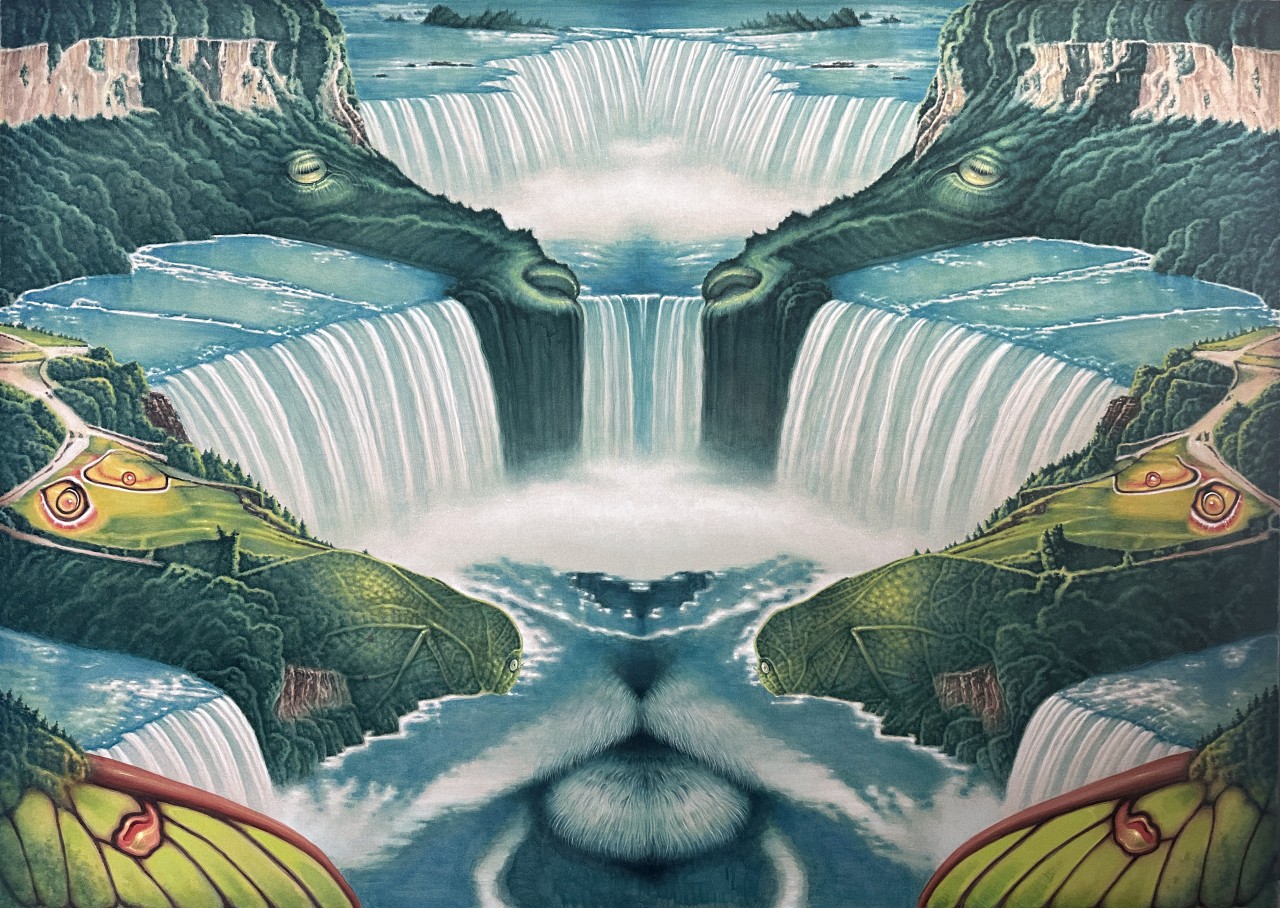 장종완, <뉴 에이지 나이아가라 2>, 2026, 린넨에 아크릴릭 과슈, 색연필, 162.1x227.4cm
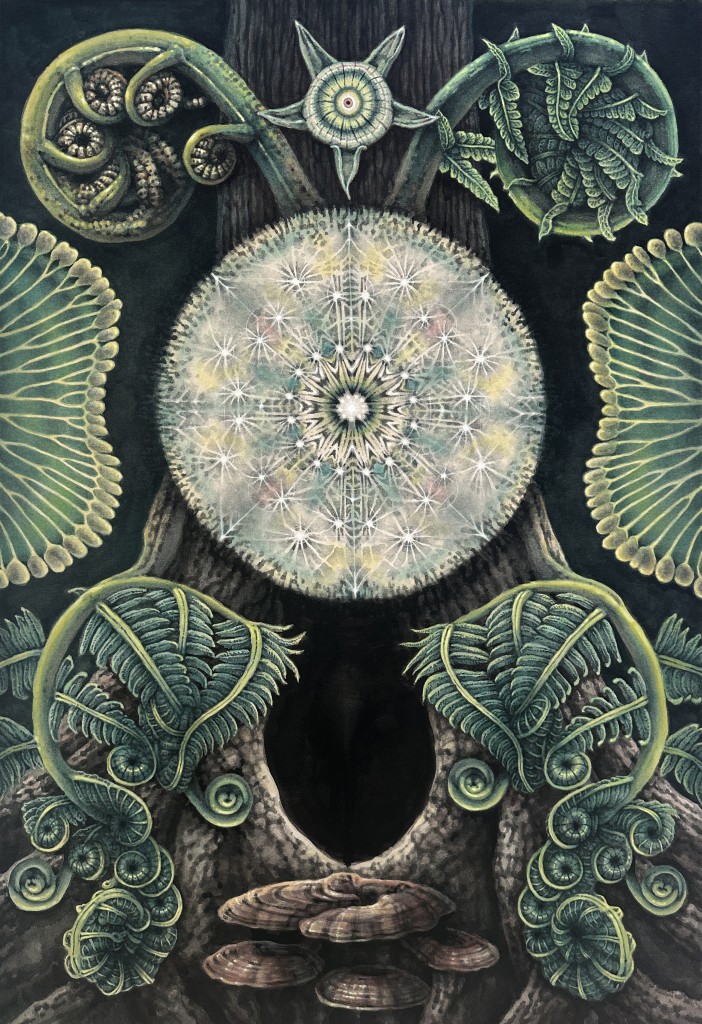 장종완, <거울 정원 2>, 2026, 린넨에 아크릴릭 과슈, 색연필, 162.2x112.2cm
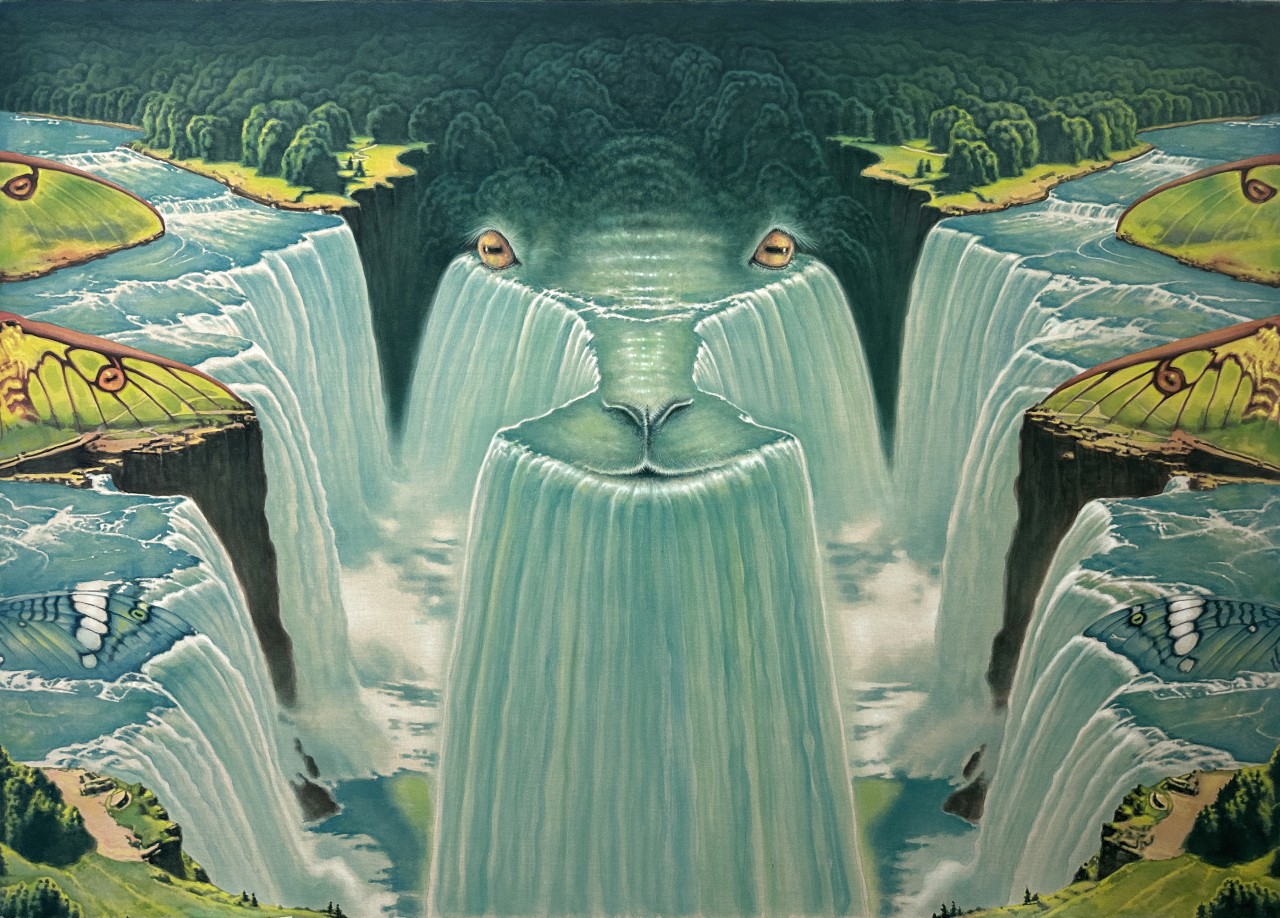 장종완, <뉴 에이지 나이아가라 1>, 2026, 린넨에 아크릴릭 과슈, 색연필, 162.1x227.4cm
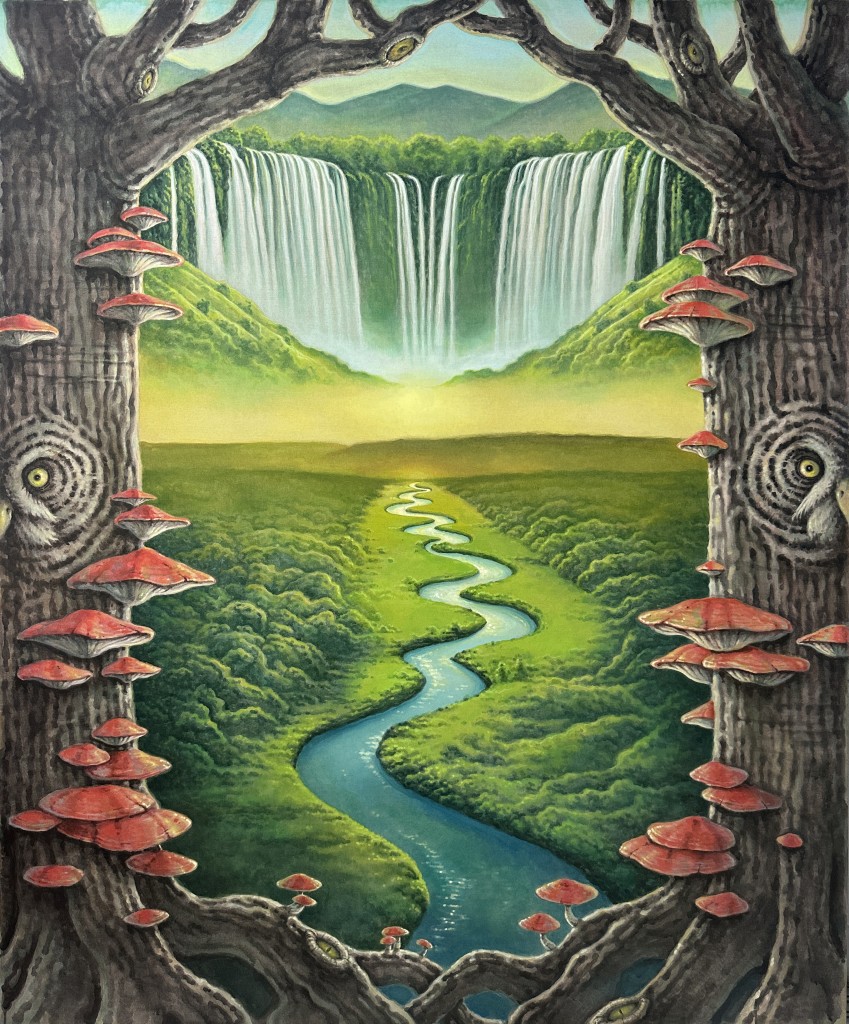 장종완, <부엉이 교향곡 1>, 2026, 린넨에 아크릴릭 과슈, 색연필, 162.2x130.3cm
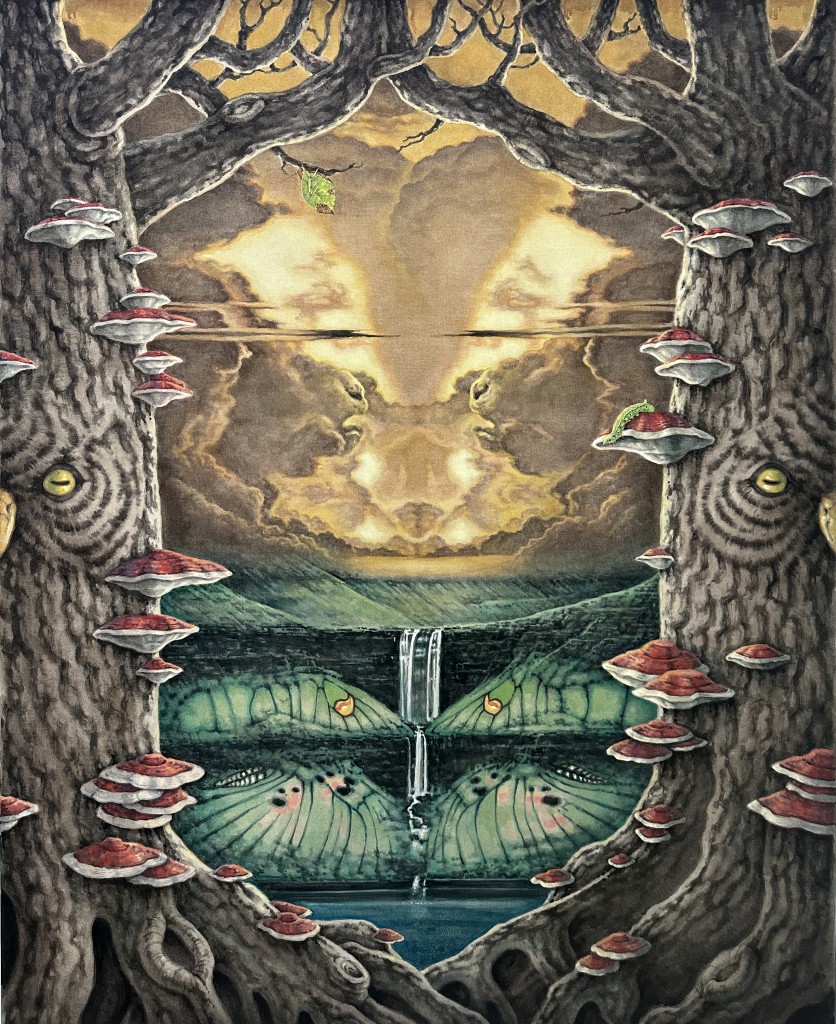 장종완, <부엉이 교향곡 2>, 2026, 린넨에 아크릴릭 과슈, 색연필, 162.2x130.3cm
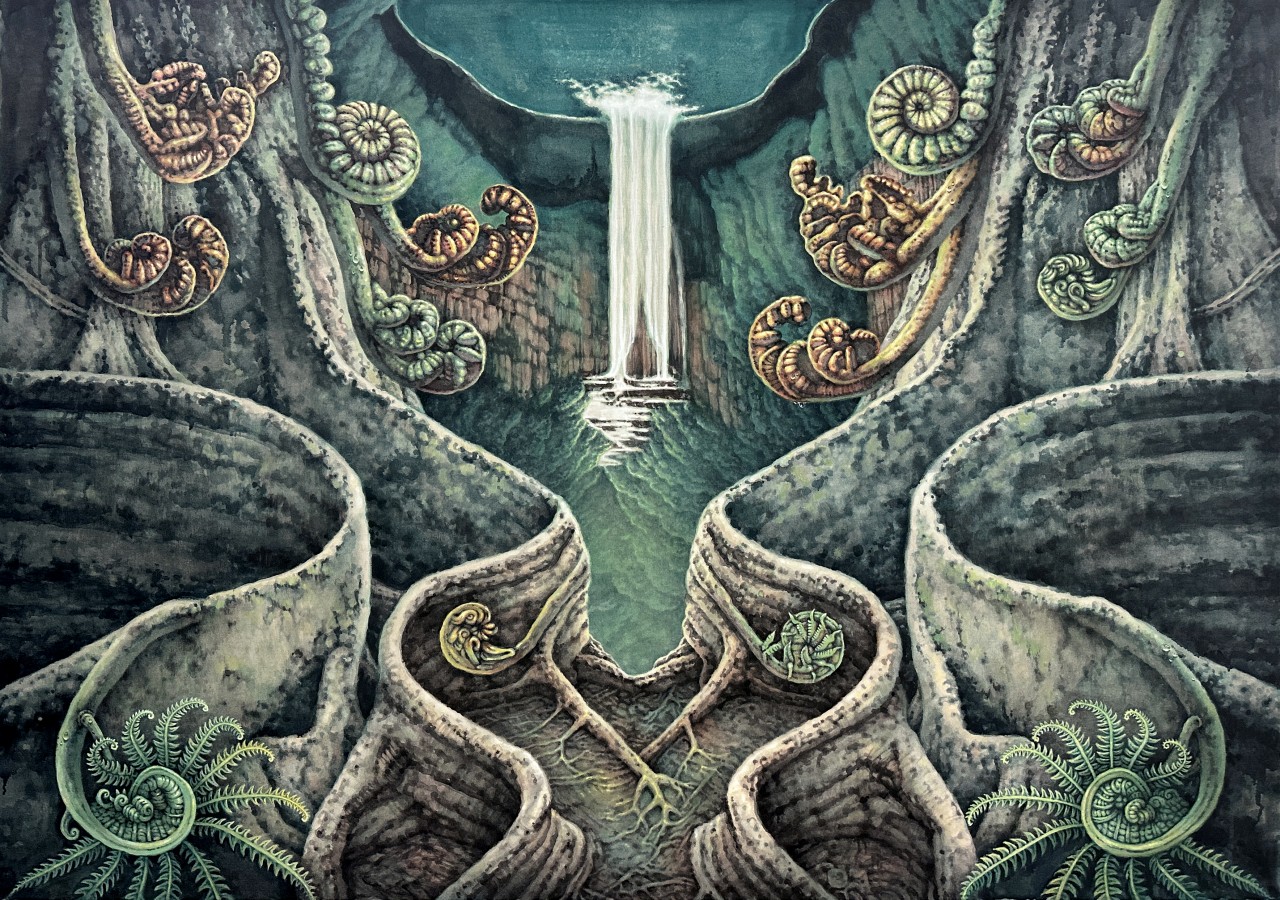 장종완, <소실점>, 2026, 린넨에 아크릴릭 과슈, 색연필, 162.1x227.4cm
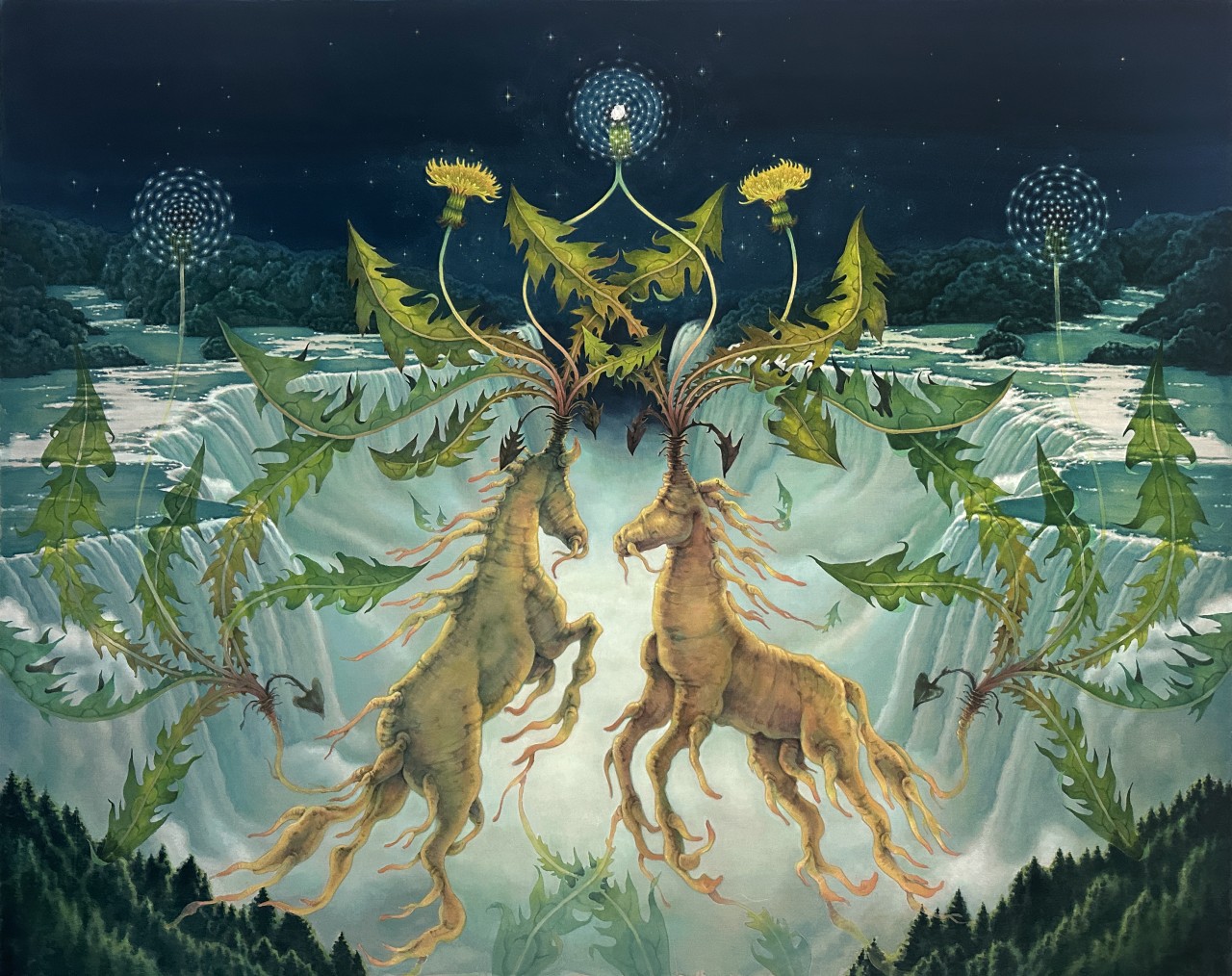 장종완, <거울 회랑 1>, 2026, 린넨에 아크릴릭 과슈, 색연필, 181.9x227.4cm
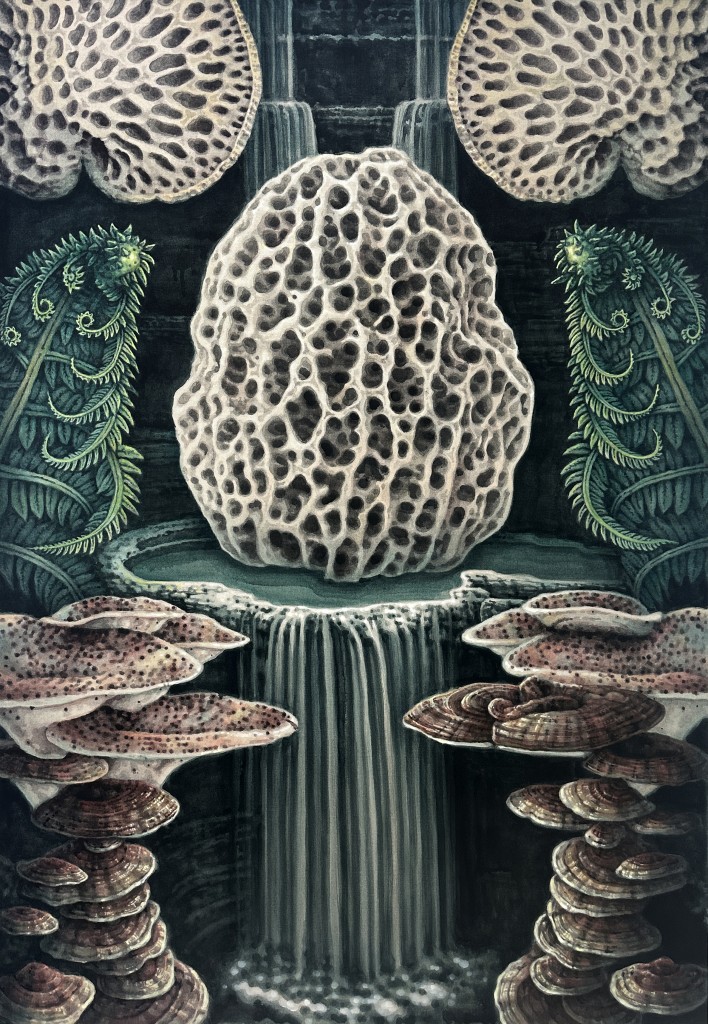 장종완, <거울 정원 1>, 2026, 린넨에 아크릴릭 과슈, 색연필, 162.2x112.1cm